

Choosing the right sandwich prep table can significantly improve kitchen efficiency, food safety, and service speed. Whether you run a deli, café, food truck, or full-service restaurant, the right prep table helps keep ingredients fresh, organized, and within arm’s reach during busy service hours.
This buyer’s guide breaks down everything you need to know — without sales hype — so you can confidently choose a best sandwich prep table that fits your space, volume, and budget.
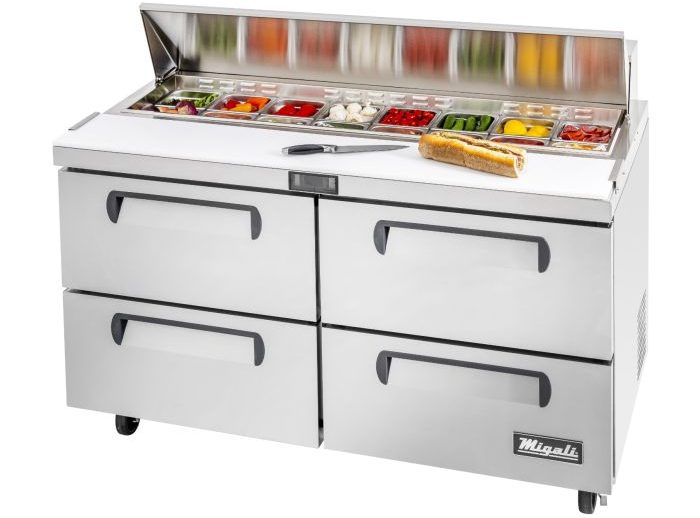
Table of Contents
What Is a Sandwich Prep Table?
A sandwich prep table is a refrigerated food prep workstation that combines cold storage, ingredient pans, and a cutting surface. It allows staff to assemble sandwiches quickly while keeping ingredients at food-safe temperatures.
Most models include:
- Refrigerated base storage
- Top-mounted pan rails for toppings
- Insulated lids
- Poly cutting boards
Why the Right Commercial Sandwich Prep Table Matters
Choosing the wrong commercial sandwich prep table can lead to:
- Poor workflow
- Temperature inconsistencies
- Ingredient spoilage
- Wasted kitchen space
- Higher energy costs
The right unit improves speed, consistency, hygiene, and profitability.
Key Factors to Consider When Buying a Sandwich Prep Table
1. Size & Kitchen Space
Prep tables range from 36 inches to 72+ inches.
Choose based on:
- Available floor space
- Number of ingredients used daily
- Number of staff working the station
General rule:
- Small café / food truck → 36″–48″
- Medium deli → 60″
- High-volume restaurant → 72″+
Always leave clearance space for ventilation.
2. Pan Capacity & Configuration
Most refrigerated prep table use 1/6-size food pans, but configurations vary.
Ask yourself:
- How many toppings do you use daily?
- Do you rotate ingredients frequently?
- Do you need deeper pans for high-volume items?
More pans = faster service, but also more refrigeration load.
3. Refrigeration Type & Temperature Control
Look for:
- Digital temperature displays
- Consistent cooling between 33°F–41°F
- Even airflow across the pan rail
This is critical for food safety compliance.
4. Build Quality & Materials
Commercial prep tables should use:
- Stainless steel interiors & exteriors
- Heavy-duty hinges
- Durable gaskets
Stainless steel resists corrosion, cleans easily, and meets health code standards.
5. NSF Certification
Always choose NSF-certified equipment.
This ensures the prep table meets food safety and sanitation standards required by most health departments.
6. Energy Efficiency
Energy-efficient units:
- Reduce long-term operating costs
- Run cooler in tight kitchens
- Often include eco-friendly refrigerants
Look for ENERGY STAR or high-efficiency compressors.
Common Mistakes to Avoid
- Buying residential units for commercial use
- Choosing a unit too small for peak hours
- Ignoring airflow clearance requirements
- Skipping NSF certification
- Overloading pans beyond cooling capacity
Sandwich Prep Table vs Other Prep Tables
Sandwich prep tables differ from:
- Pizza prep tables (deeper pans, colder rails)
- Work tables (no refrigeration)
- Salad prep tables (different pan layouts)
- Always match the table to your menu.
How Long Does a Commercial Prep Table Last?
With proper maintenance, a quality sandwich prep table can last 8–12 years.
To extend lifespan:
- Clean daily
- Calibrate temperature monthly
- Replace gaskets when worn
- Avoid overloading pans
FAQ
What size sandwich prep table is best for a small restaurant?
A 48–60 inch model works well for most small to mid-size kitchens.
Do sandwich prep tables need a dedicated power outlet?
Yes. Most commercial units require a dedicated circuit to avoid power overload.
How often should sandwich prep tables be cleaned?
Daily surface sanitation and weekly deep cleaning are recommended.
Final Thoughts
The best sandwich prep table isn’t the most expensive one — it’s the one that matches your kitchen size, menu complexity, and service volume. By focusing on build quality, refrigeration performance, and workflow efficiency, you’ll make a purchase that pays off for years.